Expertise in large dimensions, from prototype to medium series
Bending large-dimension tubes is a major technical challenge in many industrial sectors: heavy mobility, energy, defense, aerospace, and special equipment.
This challenge is based on a three-part combination: the bending machine, the tooling, and the tube bender. It is the meeting of industrial capacity and technical expertise.
The larger the tube diameter, the greater the constraints associated with bending. Material behavior changes, the required forces are higher, and even the slightest variation can impact the final geometry of the part.
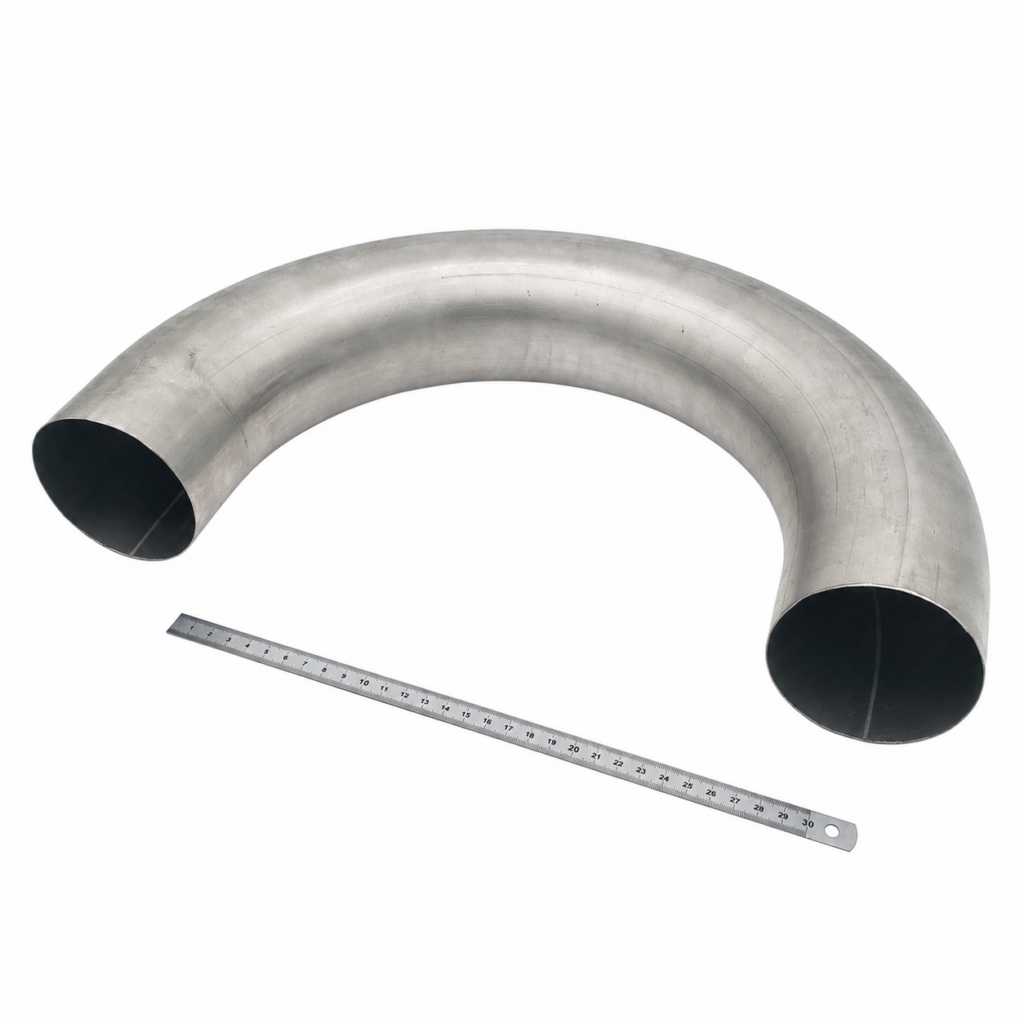
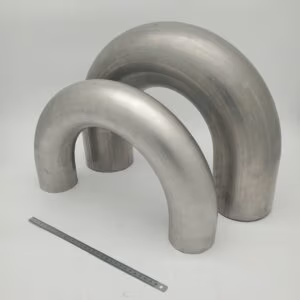
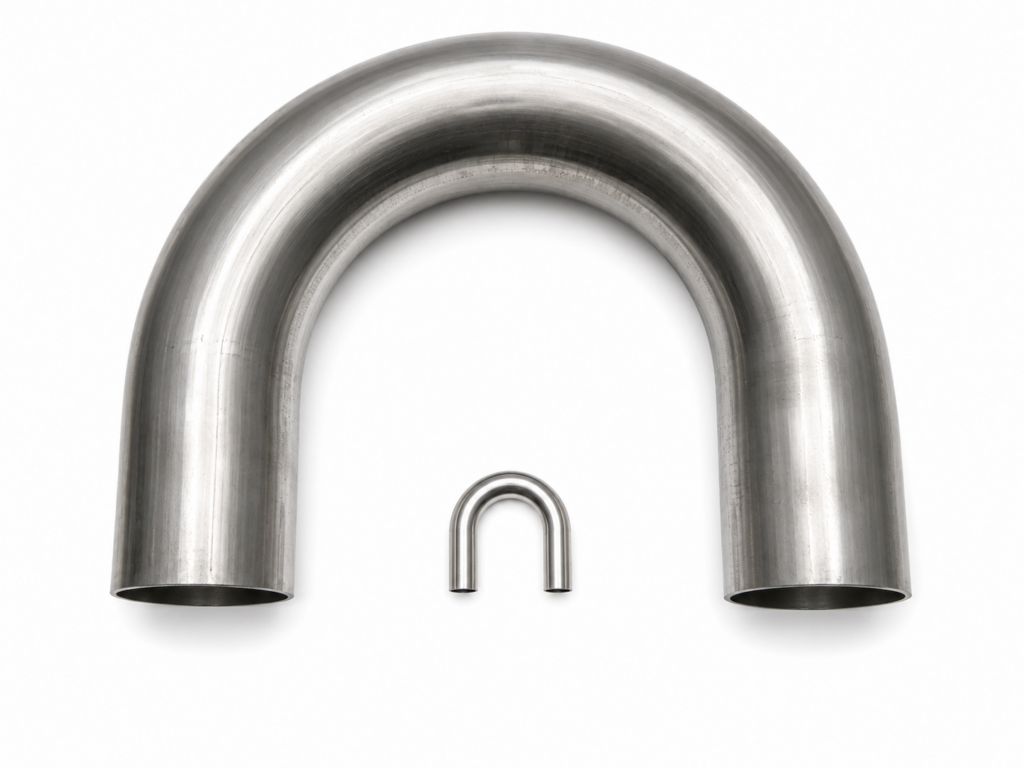
- Here: a Ø88.9 with 0.89 mm thickness at a 180 mm radius!
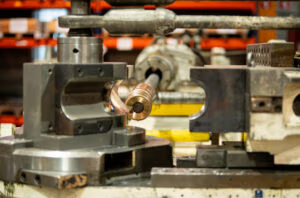
The tube bender must fine-tune the setup according to the required radius. The shorter the bending radius, the more technical the operation becomes, requiring tooling sets with fine adjustments. A mandrel with several articulated ball joints will be necessary to support the tube, and a wiper die may even be installed to prevent wave formation on the inside of the bend.
Wall thickness also has a direct impact—more specifically, the ratio between the tube diameter and its thickness. A Ø120 with 2 mm thickness will be more difficult to bend than a Ø60×2 at an equivalent bending radius.
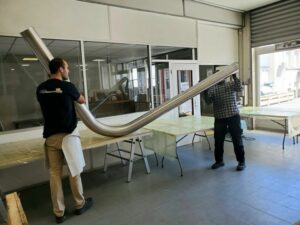
Far from thin walls and delicate bends, bending heavy wall thicknesses and large sections comes with its own set of constraints. The forces applied are significant, and handling the part becomes a key issue in order to control it properly.
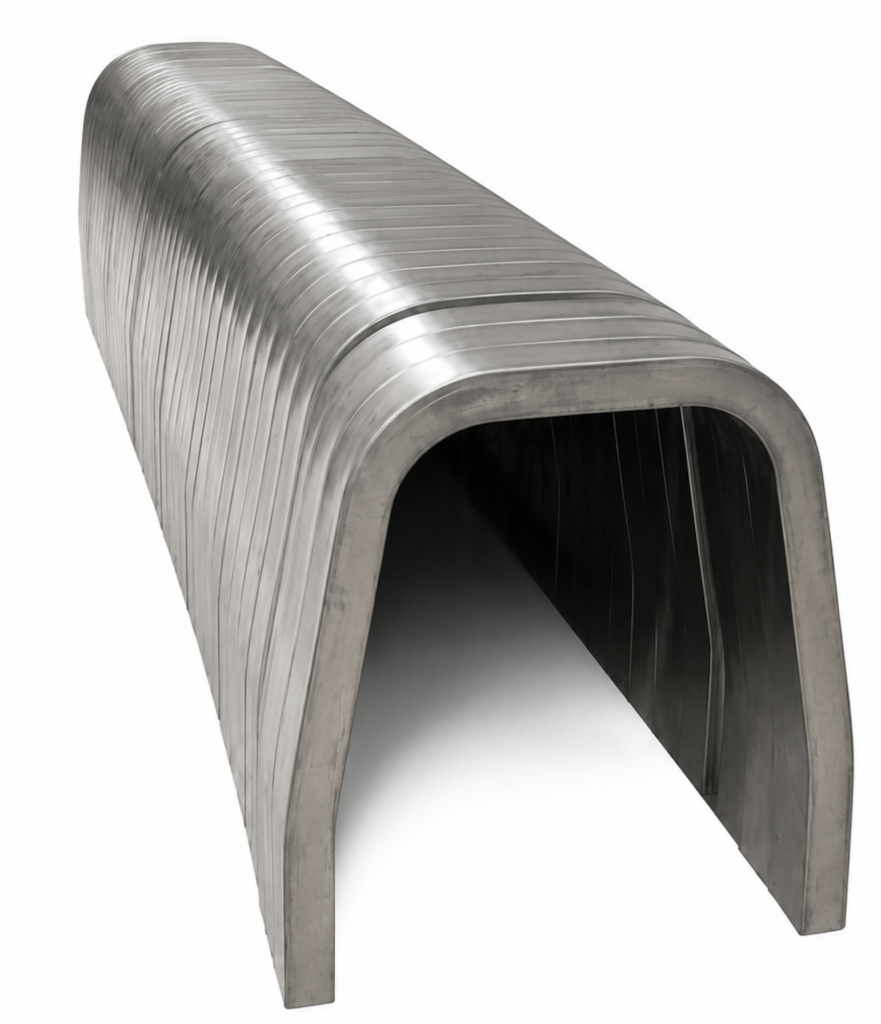
- Here: 140/80/3 mm rectangular bent tubes!
Large-diameter tube bending therefore requires suitable equipment, specific tooling, and above all a thorough knowledge of the materials being processed. Steel, stainless steel, aluminum, copper, or brass: each material reacts differently to the stresses generated during bending and requires precise settings to guarantee a compliant result.
Beyond the part dimensions, each operation requires perfect control of manufacturing parameters in order to preserve the tube’s geometric and mechanical characteristics:
- Control of ovalization
- Limiting deformation
- Control of series repeatability
- Handling heavy and bulky parts
- Compliance with the customer’s dimensional requirements
At Lyon Cintrage Seignobos, our expertise enables us to process tubes up to 170 mm in diameter while meeting the highest requirements in terms of quality and precision.
This expertise is built on more than a century of industrial experience, a tooling inventory with several hundred references, and the know-how of our teams, capable of supporting our customers from prototype to production.
Because behind every large-diameter bent tube lies a key objective: to provide a reliable, precise, and durable solution for applications where requirements leave no room for approximation.
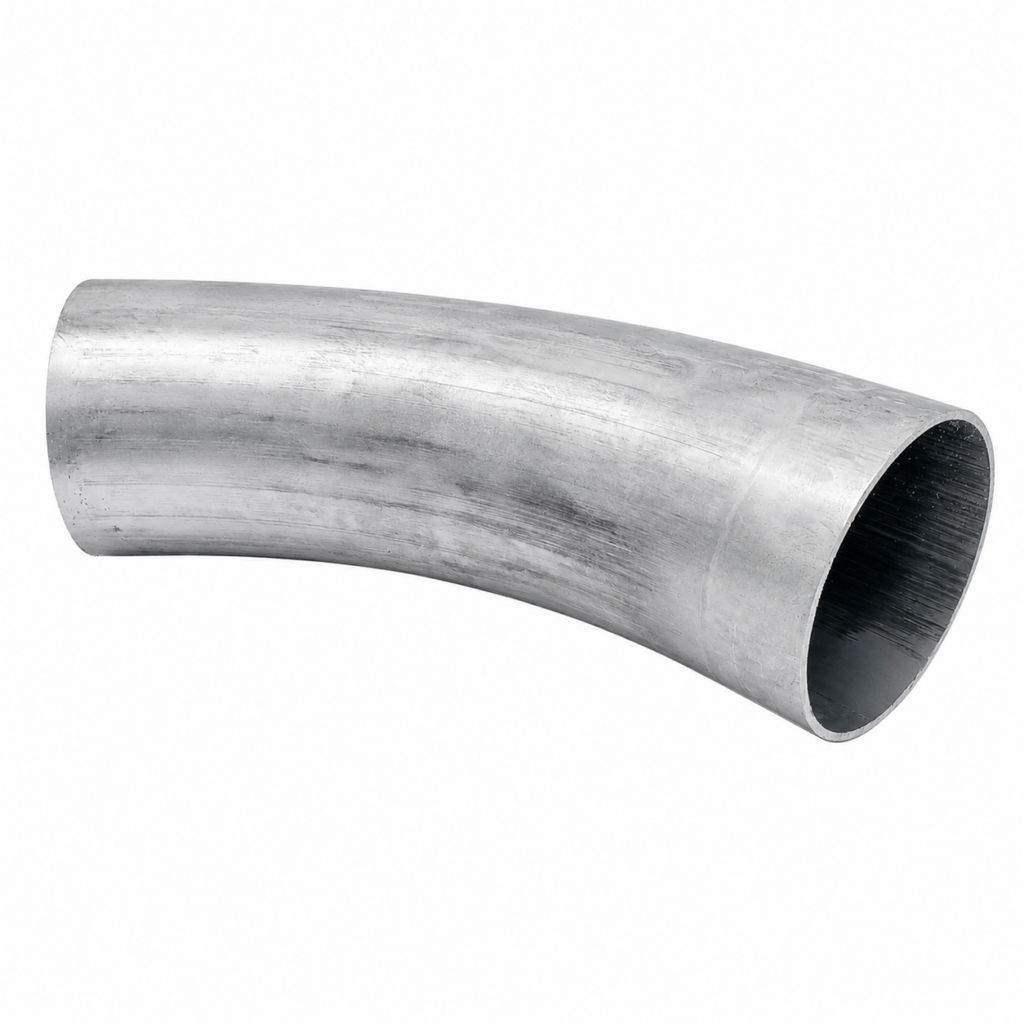
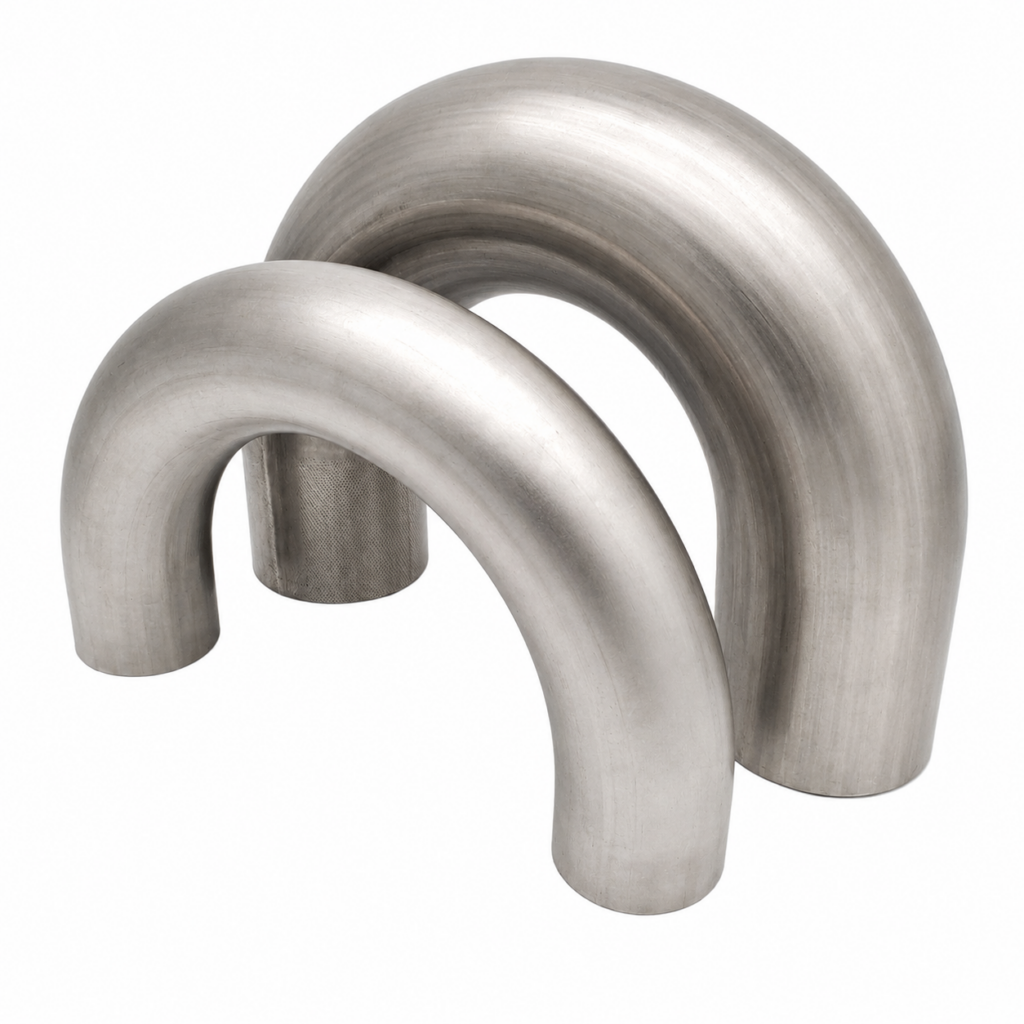
Lyon Cintrage manufactures your parts from 3 to 168 mm in diameter