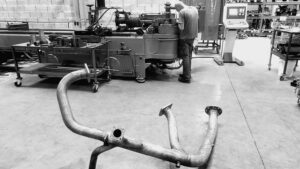
The technique of cold rotary draw bending is a very specific trade with little-known expertise; let’s try to demystify it…
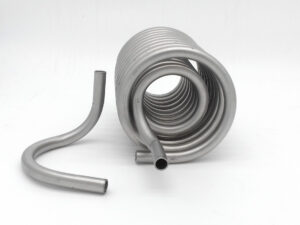
A bend is said to be short-radius when its radius is less than 6 times the tube diameter. For example, a Ø60 mm tube bent at “1D” will have a radius of 60 mm.
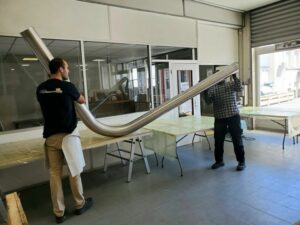
If the radius is larger than “6D”, it is often referred to as “tube rolling”. Rolling uses other techniques that we will not cover in this article.
Tight-radius bending is used when space is limited and part compactness is important, particularly in sectors such as Aerospace, Space, or Energy…
Why is “1D” bending complex?
The shorter the radius, the higher the stress applied to the material and the greater the risk of deformation. “1D” tube forming therefore involves very significant mechanical constraints.
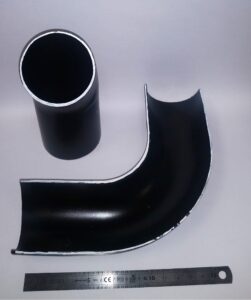
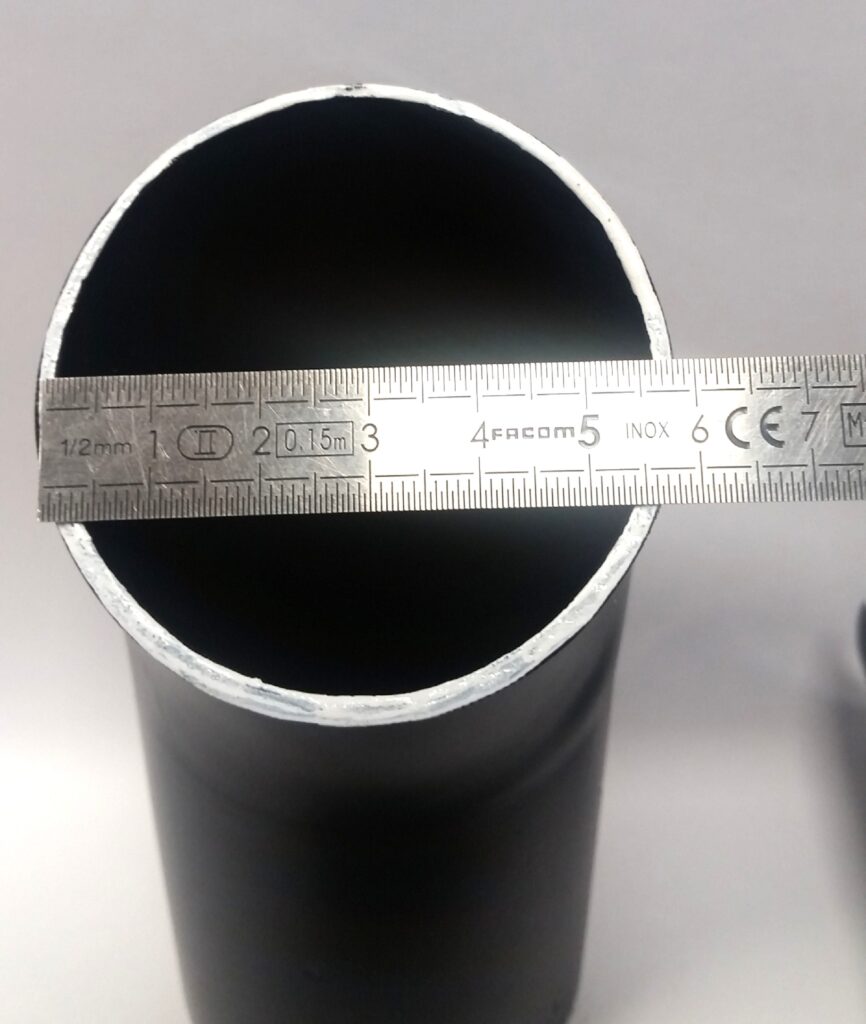
Complexity increases significantly when the tube has a thin wall thickness. On thin tubes, the risk of defects is amplified:
- Section ovalization
- Wrinkling on the intrados of the bend
- Thinning on the extrados of the bend
- Surface markings, particularly on titanium or aluminum
- Material failure if the forces are too great and/or uncontrolled.
To limit these effects, several precautions must be taken:
- Machine settings
- Lubrication quality
- The choice and knowledge of material behavior
- and finally, one of the most important: the design, manufacture, and adjustment of the tooling
Bending tooling plays a vital role in the bender’s trade
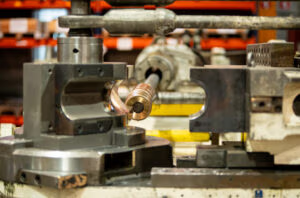
Depending on the bending difficulty, the bender will use more or fewer elements from this tool kit. Each component has very specific characteristics: geometry adapted to the diameter, controlled surface finish, and tooling materials chosen based on the grade to be bent and the mechanical constraints generated.
- The bend die, which defines the bend radius
- The clamp die, used to secure the tube during bending
- The pressure die, which acts as a “counter-support” on the tube during deformation
- The wiper die, nestled between the die and the tube
- The mandrel (sometimes called a “bullet”) is placed inside the tube to prevent it from collapsing…
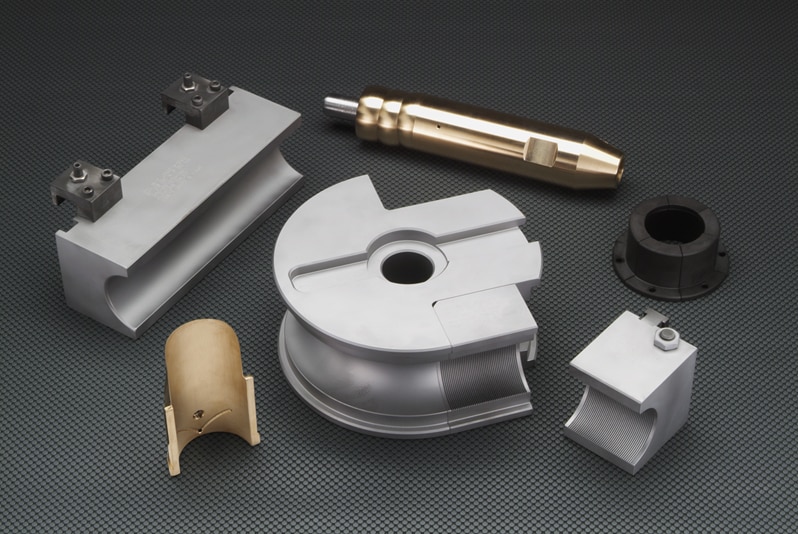
Photo Credit and Image Rights: Numalliance (Production tooling, industrial tooling solutions)
These techniques are the same for round, square, and rectangular tubes, as well as for different types of materials: stainless steel, steel, aluminum tubes, etc.
But tooling is nothing without the bender’s expertise. This is especially evident in short-radius bending: you have to understand how the material reacts, know how to adjust settings, correct, test, and start again…
One does not work without the other: excellent tooling that is poorly adjusted will not yield a good result. Conversely, even a skilled bender will be limited if the tooling is not suitable.
In reality, the quality of a bend comes from the balance between the two: Good tooling is nothing without a good bender.
It is this entire alchemy that allows the material to be transformed, sometimes as if by magic…